
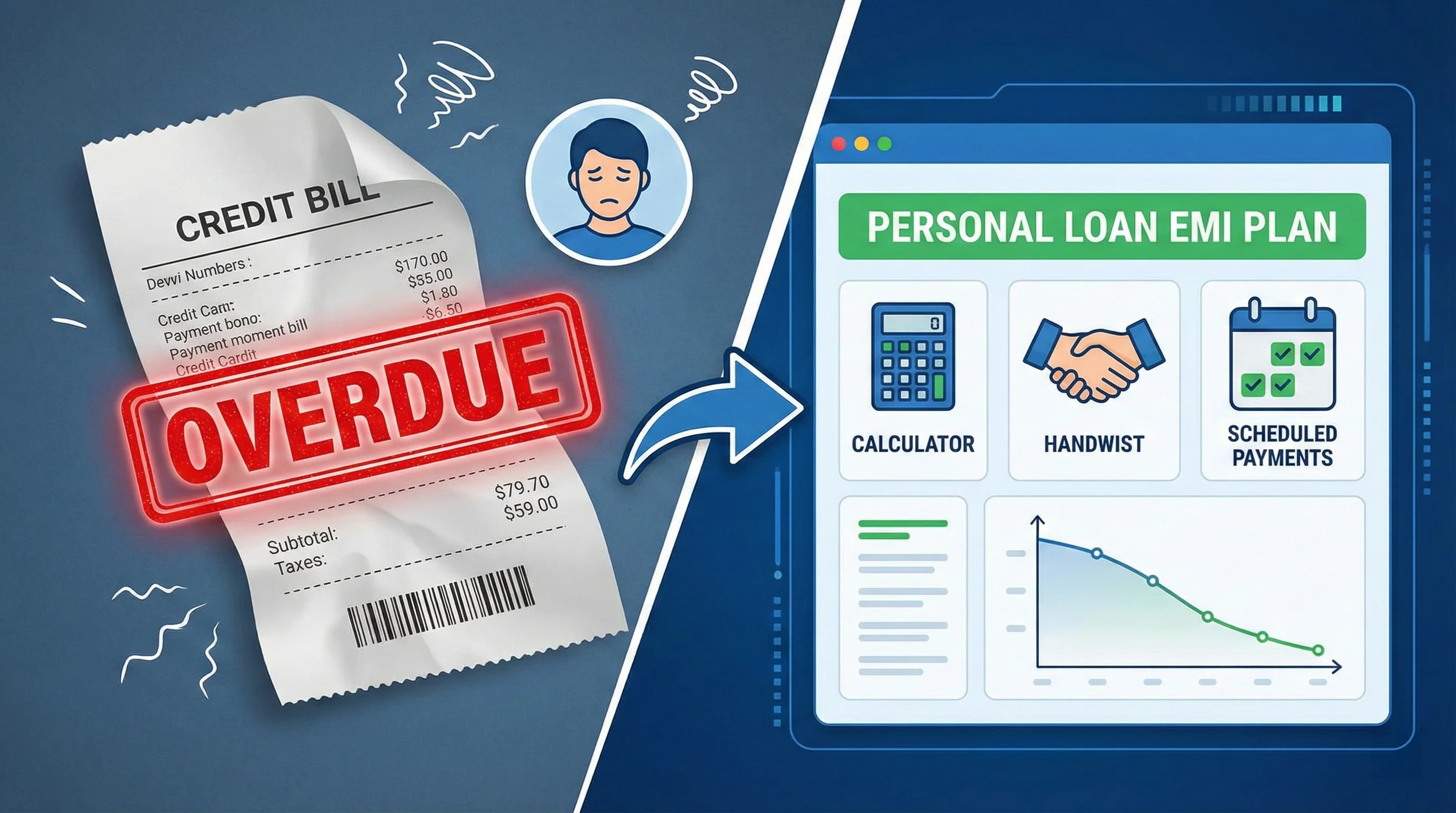
Is It Safe to Take a Personal Loan for Credit Card Bill Payment?
Table of Contents
- Why Credit Card Debt Becomes a Problem
- What Does Taking a Personal Loan for Card Payment Mean?
- Is It Safe to Do This?
- When It Makes Financial Sense ✅
- When It Can Be Risky ❌
- Impact on Your Credit Score
- Personal Loan vs Credit Card Debt: Quick Comparison
- Better Alternatives You Should Also Consider
- Smart Steps Before Taking the Loan
- FAQ: Personal Loan for Credit Card Bill Payment
- Conclusion: Safe Tool, Only With Discipline
Struggling with a high credit card bill is more common than most people admit. With interest rates crossing 35–45% annually, even a small unpaid balance can spiral into long-term debt. This is why many borrowers consider taking a personal loan to pay off credit card bills. But is this a smart financial move—or just swapping one problem for another? In this guide, we explain when it is safe to take a personal loan for credit card bill payment, when it’s risky, and how to decide wisely in 2026.
Why Credit Card Debt Becomes a Problem
Credit cards are convenient, but they’re among the costliest forms of borrowing. When you don’t pay the full bill:
-
Interest is charged monthly
-
Finance charges compound
-
Minimum due payments barely reduce principal
Over time, this can trap you in a cycle where you’re paying interest but not reducing debt.
What Does Taking a Personal Loan for Card Payment Mean?
This strategy is often called debt consolidation.
You take a personal loan and use it to:
-
Pay off one or multiple credit card outstanding balances
-
Convert high-interest revolving debt into fixed EMIs
Instead of multiple card dues, you repay one loan with a fixed tenure and interest rate.
Is It Safe to Do This?
Short Answer: Yes—if done for the right reasons
Taking a personal loan to clear credit card bills can be safe and beneficial, but only under specific conditions.
When It Makes Financial Sense ✅
1. Personal Loan Interest Is Much Lower
Typical rates in 2026:
-
Credit card interest: 35%–45% p.a.
-
Personal loan interest: 11%–18% p.a.
This difference alone can save thousands in interest.
2. You Have Multiple Credit Cards
Consolidating 2–4 card balances into one EMI simplifies:
-
Repayment tracking
-
Budget planning
Using an EMI calculator helps you check if the new EMI comfortably fits your monthly income.
3. You’re Paying Only the Minimum Due
If you’re stuck paying minimum dues, your debt will last for years. A personal loan forces structured repayment, which is healthier.
4. Your Credit Score Is Still Decent
If your credit score is 700+, you’re likely to get a personal loan at a reasonable rate—making consolidation worthwhile.
When It Can Be Risky ❌
1. If You Continue Using Credit Cards
This is the biggest mistake. Paying card bills with a loan and then running up new card debt doubles your burden.
2. If the Personal Loan Has High Fees
Some loans come with:
-
High processing fees
-
Insurance add-ons
-
Penalties for prepayment
Always check the total repayment amount, not just the EMI.
3. If Your Income Is Unstable
Personal loans have fixed EMIs. If income is irregular, missing EMIs can hurt your credit score more than card delays.
Impact on Your Credit Score
Short-Term
-
Credit utilization drops (good sign)
-
New loan inquiry may cause a small dip
Long-Term (If Paid on Time)
-
Credit score improves
-
Payment history strengthens
-
Debt profile becomes cleaner
According to the Reserve Bank of India, responsible repayment behavior matters more than the type of loan you take.
Personal Loan vs Credit Card Debt: Quick Comparison
| Factor | Credit Card Debt | Personal Loan |
|---|---|---|
| Interest Rate | Very high | Moderate |
| Repayment | Flexible but endless | Fixed tenure |
| Credit Score Impact | Risky if unpaid | Positive if regular |
| Stress Level | High | Lower |
Better Alternatives You Should Also Consider
Before taking a personal loan, explore:
1. Credit Card EMI Conversion
Many banks allow you to convert outstanding balances into EMIs at lower rates than revolving credit.
2. Balance Transfer Offers
Some cards offer temporary low-interest balance transfers—but watch for post-offer rate spikes.
3. Expense Replanning
Cut discretionary spending temporarily to reduce reliance on borrowed money.
Smart Steps Before Taking the Loan
-
Calculate total credit card outstanding
-
Compare personal loan interest rates
-
Use an EMI calculator to test affordability
-
Commit to not using credit cards until debt is under control
-
Close or reduce limits on unused cards
Discipline matters more than the loan itself.
FAQ: Personal Loan for Credit Card Bill Payment
Is it a good idea to take a personal loan to pay credit card bills?
Yes, if the loan interest is significantly lower and you stop further card spending.
Does this improve credit score?
Yes, over time—if EMIs are paid regularly.
Can I pay multiple credit cards with one personal loan?
Yes. This is called debt consolidation.
Is credit card EMI better than a personal loan?
Sometimes. Compare interest rates and fees before deciding.
Will banks ask why I need the personal loan?
Usually no. Usage is not strictly tracked.
Conclusion: Safe Tool, Only With Discipline
Taking a personal loan to pay off credit card bills is not a trap—but it’s not a magic fix either. It works best when used as a debt exit strategy, not as a way to create fresh spending room. If the interest rate is lower, the EMI is affordable, and you commit to changing spending habits, this move can actually improve your financial health.
The real risk isn’t the loan—it’s repeating the same credit card behavior after taking it.